Insights from Canadian Diversity:

International Students from India

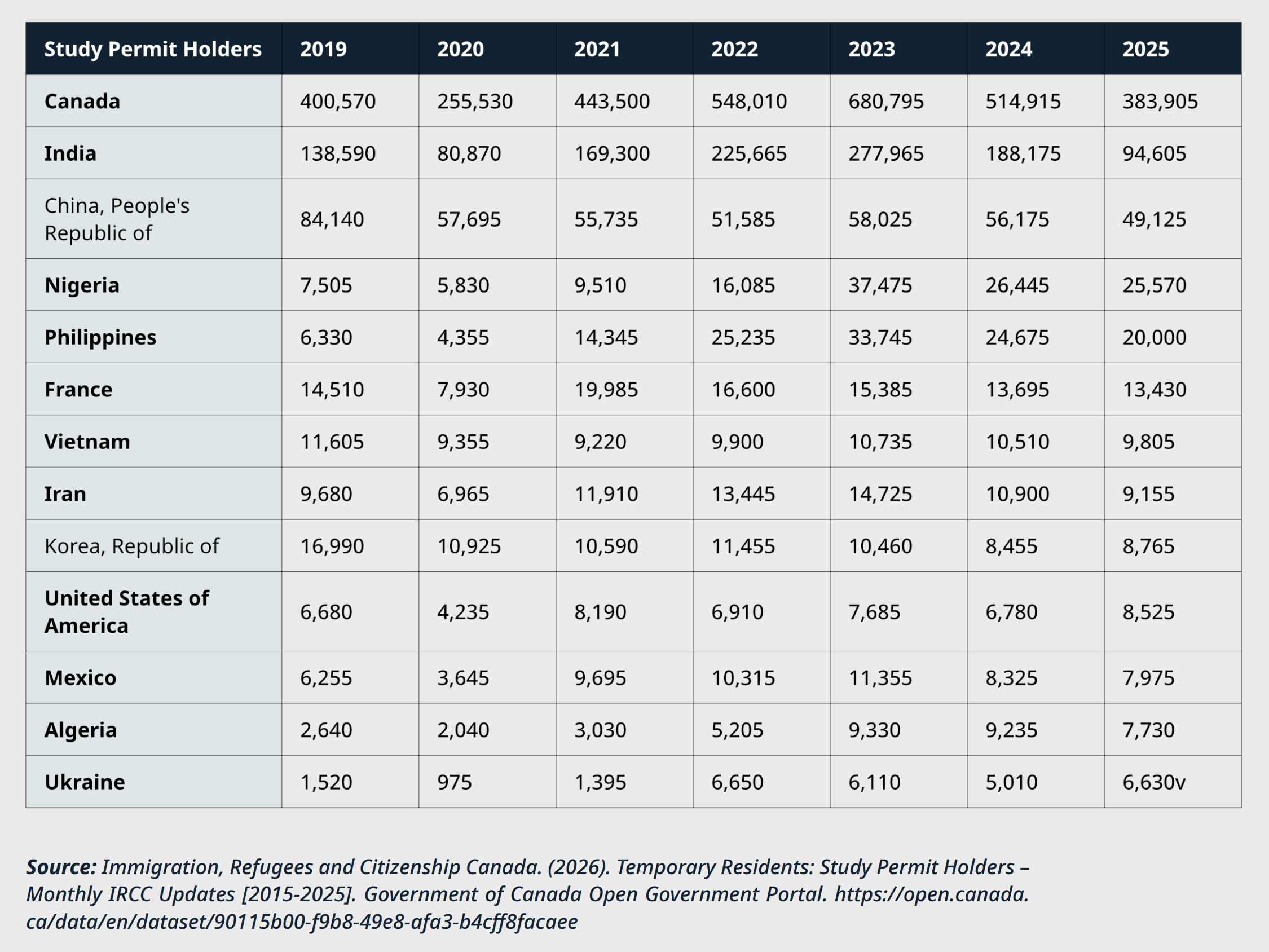
Students from India make up the largest share of international study permit holders in Canada, according to the IRCC. What challenges do these students face, what contributions have they made to the Canadian communities in which they settle, and how can they be supported?
These were among the questions pondered by multiple contributors in “The Evolving Role, Challenges, and Contributions of International Students,” the latest edition of Canadian Diversity, the ACS’ quarterly publication covering migration and demographics.

Prabhjot Kaur and Sumeet Shergill’s article exposes how workplace exploitation, housing precarity, sexual harassment, legal illiteracy, and other challenges have created unique intersectional risks for South Asian women studying in Canada.

In her contribution to the edition, Harmeet Sandhu approaches the international student experience from a psychological perspective, underscoring the mental health struggles facing South Asian students as they navigate uncertain post-graduation immigration pathways, financial burdens, family expectations, cultural adjustment, and other pressures on their path to settling in Canada.
Jack Jedwab’s piece argues that responsibility for the recent reduction in international student numbers lies not exclusively with government policy, but also with post-secondary institutions and recruitment practices. He highlights the impact of study permit reductions on Indian students in particular, who between 2024 and 2025 accounted for nearly two-thirds of the overall decline in international student numbers—the steepest drop of any nationality.

Interested in learning more about international and/or Indian students in Canada? You can access the latest edition of Canadian Diversity and explore past editions at our website: